Libraries for the Green Transition

From EBLIDA website:

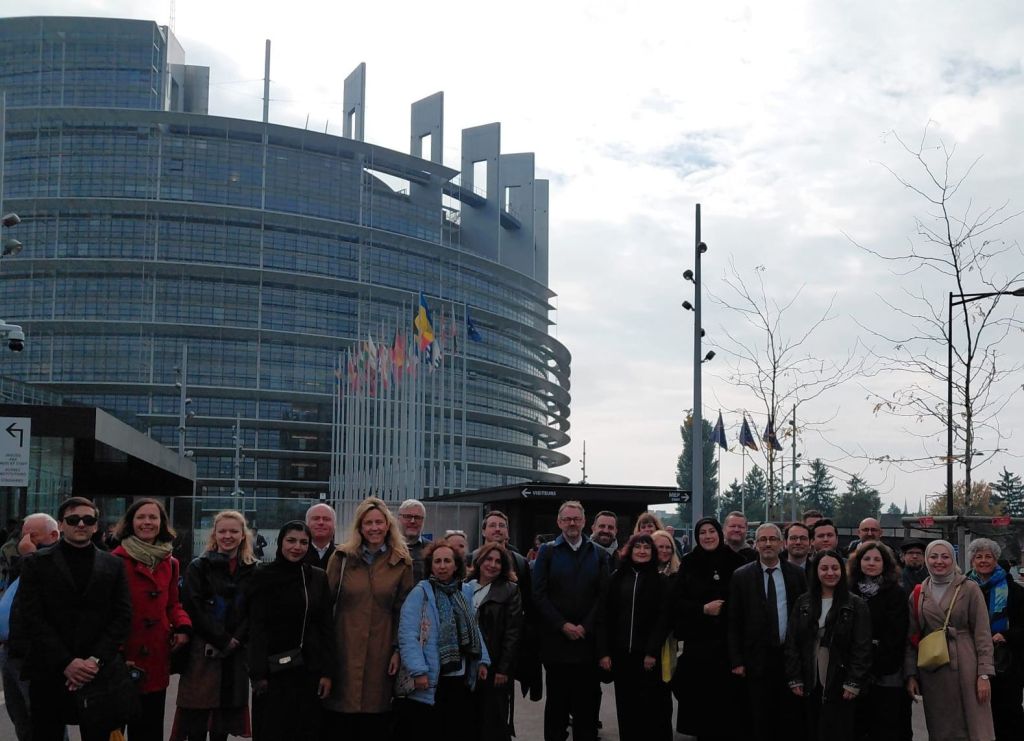
On 20-21 October, policymakers, library professionals and sustainability experts gathered in Strasbourg for the event “Libraries for the Green Transition: From Climate Shelter to Local Action”, organised by EBLIDA in cooperation with Public Libraries 2030, within the framework of ELAN.

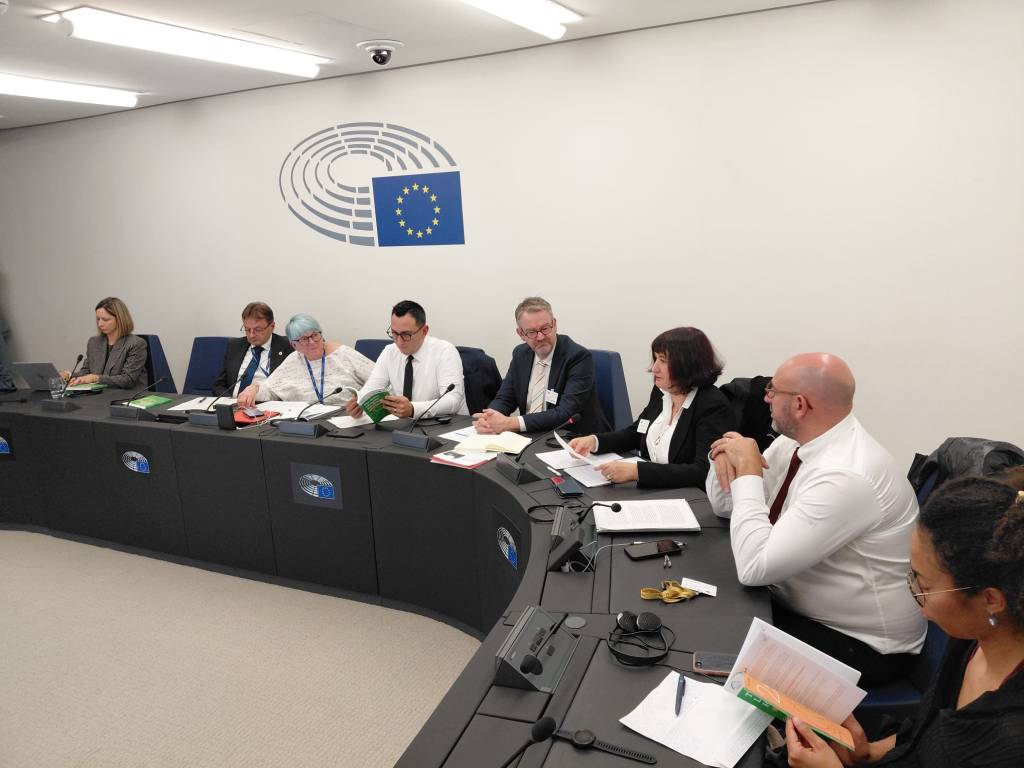
🏛️ On 20 October we were at the European Parliament, where MEP Hannes Heide hosted us for a discussion on libraries and European policy. Commissioner Glenn Micallef joined us to discuss how libraries can support Europe’s green transition.

📖 On 21 October, we moved from policy to practice at the National University Library of Strasbourg. We explored advocacy, climate communication, youth engagement, and initiatives like the Green Librarian Handbook, International Child Press, and WEEK17.
Read more: Libraries for the Green Transition in Strasbourg: Recordings, Presentations and Photos available – EBLIDA

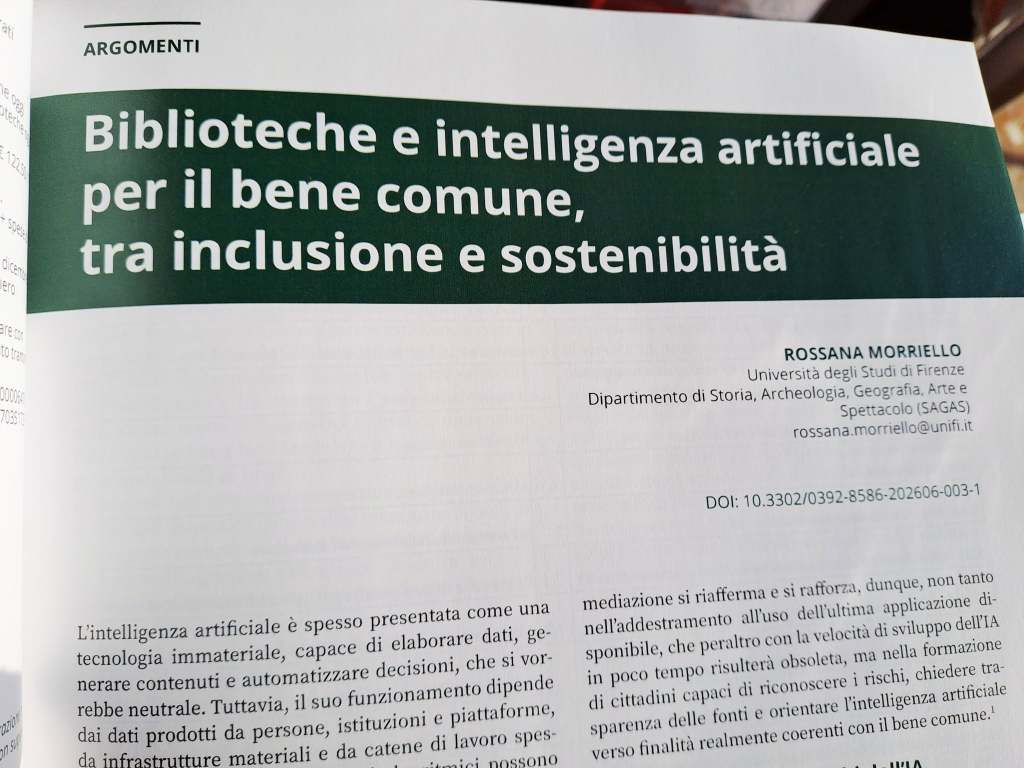
Sull’ultimo numero della rivista scientifica “Biblioteche oggi”

This paper examines the relationship between libraries, artificial intelligence and the common good from the perspectives of inclusion, sustainability and social responsibility. Moving from the MIT AI Risk Repository, it focuses on three areas of risk that are especially relevant to information professions: discrimination and toxicity, misinformation and disinformation, and socioeconomic and environmental harms. The paper shows how AI systems may reproduce and amplify existing inequalities, particularly gender and intersectional biases, while also contributing to the degradation of information ecosystems through misleading, decontextualized or manipulated content. It further highlights the material and social infrastructures behind AI, including the invisible labour of data workers and the growing environmental impact of data centers. Against this background, libraries are presented not merely as points of access to new technologies, but as spaces of critical mediation, public education and democratic accountability. The paper argues that AI literacy should be understood as an expanded dimension of information literacy, capable of integrating ethical, social, ecological and political awareness. Only by recognizing both the potential and the risks of AI can libraries help orient algorithmic systems toward inclusive, sustainable and genuinely common-good objectives.

Data Information Literacy: contributo all’Educazione Sostenibile

Pubblicato per De Gruyter il volume Libraries Driving Education for Sustainable Development, al quale ho contribuito con il capitolo Data Information Literacy for Sustainable Development with a Special Focus on Italy. Il libro è disponibile a stampa e in digitale open access qua https://www.degruyterbrill.com/document/doi/10.1515/9783111336466/html

Una riflessione sul ruolo della Data Information Literacy come competenza chiave per un’educazione sostenibile, capace di formare cittadini consapevoli nell’uso, gestione e interpretazione dei dati. Un contributo che collega alfabetizzazione ai dati, responsabilità sociale e obiettivi di sviluppo sostenibile.

Rapporto AIB 2021-2023: le biblioteche italiane e l’Open Access

E’ uscito il Rapporto sulle biblioteche italiane 2021-2023 dell’Associazione Italiana Biblioteche – AIB al quale ho contribuito con grande piacere sul tema dell’open access.

Molti gli altri contributi d’interesse che offrono nell’insieme un’analisi approfondita dell’evoluzione del settore bibliotecario in Italia negli anni cruciali post-pandemia, evidenziando dati, tendenze e criticità.

https://www.aib.it/…/rapporto-sulle-biblioteche-italiane/

C’è ancora bisogno di biblioteche?

La risposta a più voci a questa domanda in un articolo in open access sul numero di dicembre 2024 di Biblioteche oggi Trends

Atti del Convegno NILDE

Pubblicati gli atti in open access dell’XI Convegno NILDE Un’esplosione di conoscenza: dalla teoria alla pratica per ridurre le disuguaglianze all’interno dei quali è presente la relazione del mio intervento Le biblioteche italiane per lo sviluppo sostenibile: i risultati di un’indagine.

Salone del libro – 10 maggio

Incontro al Salone del libro organizzato dal Gruppo di lavoro ASviS per la cultura

Festival dello sviluppo sostenibile

Che cosa possono fare le biblioteche per contrastare il cambiamento climatico e mitigarne gli effetti?

Ne parlerò l’11 maggio a Bologna, al Convegno ASviS Cultura e cambiamento climatico, nell’ambito del Festival dello Sviluppo Sostenibile 2023

Biblioteche bene comune

In apertura del numero di marzo 2023 di Biblioteche oggi il mio articolo Biblioteche, conoscenza, bene comune e lo stretto legame con lo sviluppo sostenibile, disponibile ad accesso aperto.